

The History of the Castle
700 years and so much to tell
As mentioned, Örebro’ castle dates all the way back to the 14th century and offers both royal history and fascinating stories. After all, there’s clearly a lot to tell when famous figures like Gustav Vasa, Lasse-Maja, Jean Baptiste Bernadotte, and many others have been held here.
So, take a look around and get a glimpse of the castle's (and sometimes even the city's) long history. Of course, there's a whole lot more to discover. A really great tip is to join a guide on a historical tour of the castle. It gives you even more insight – and makes your castle visit extra special.
The 1300s
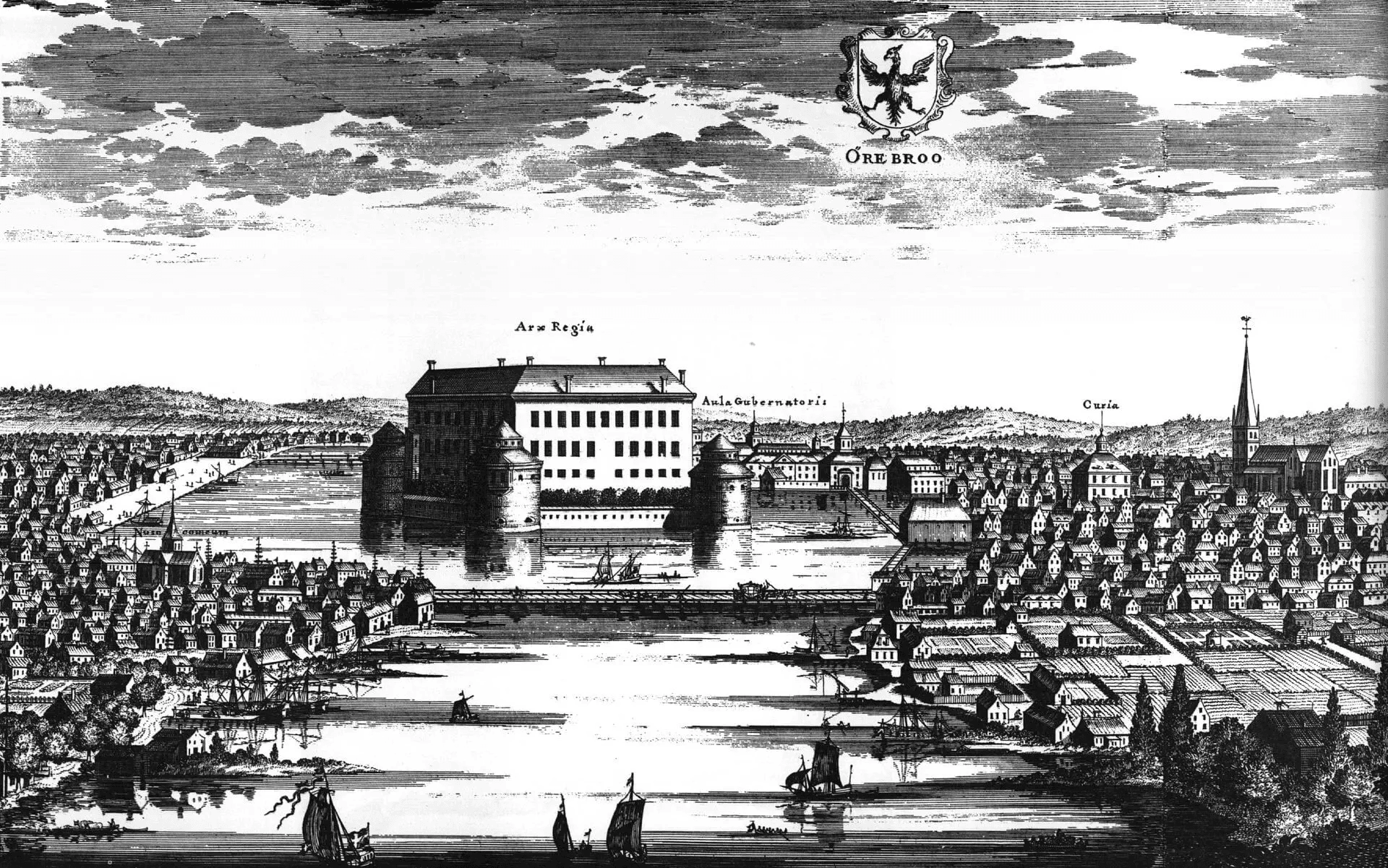
The history of Örebro Castle goes back about 700 years. That's when Örebro got its city privileges and became a real city. By today's standards, the city wasn't that big, just a few blocks around Storbron and Stortorget. But still, a city.
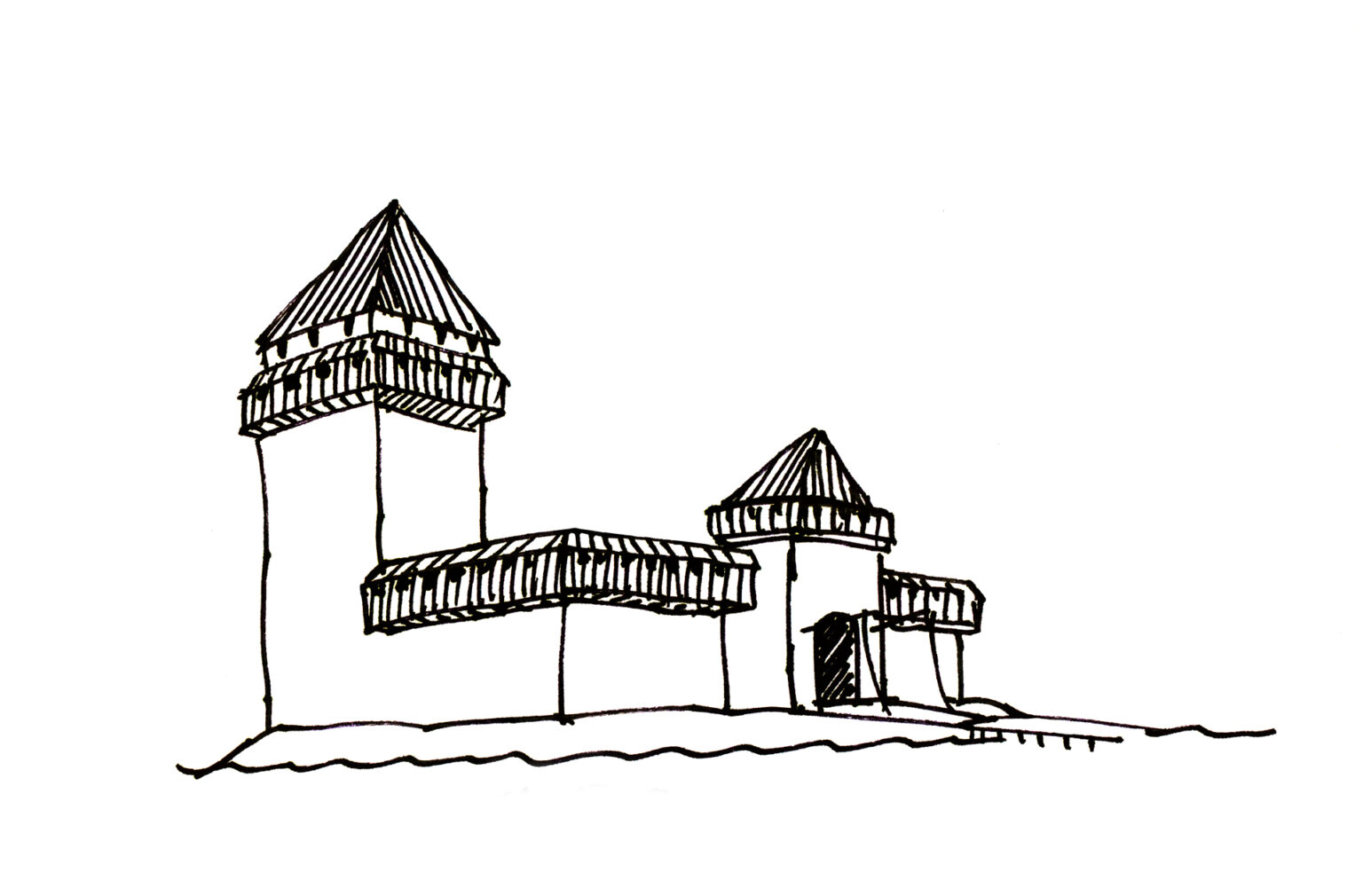
Of course, a proper city needs its own defensive fortress. So, a pretty simple fortress was built on an islet near the important bridge over Svartån.
Initially, it consisted of a stone house, a thirty-meter-high defensive tower, and a curtain wall about seven meters high and three meters thick. At the top of the tower was the lookout, and at the very bottom, there was probably a dark and cold dungeon.
The 1400s
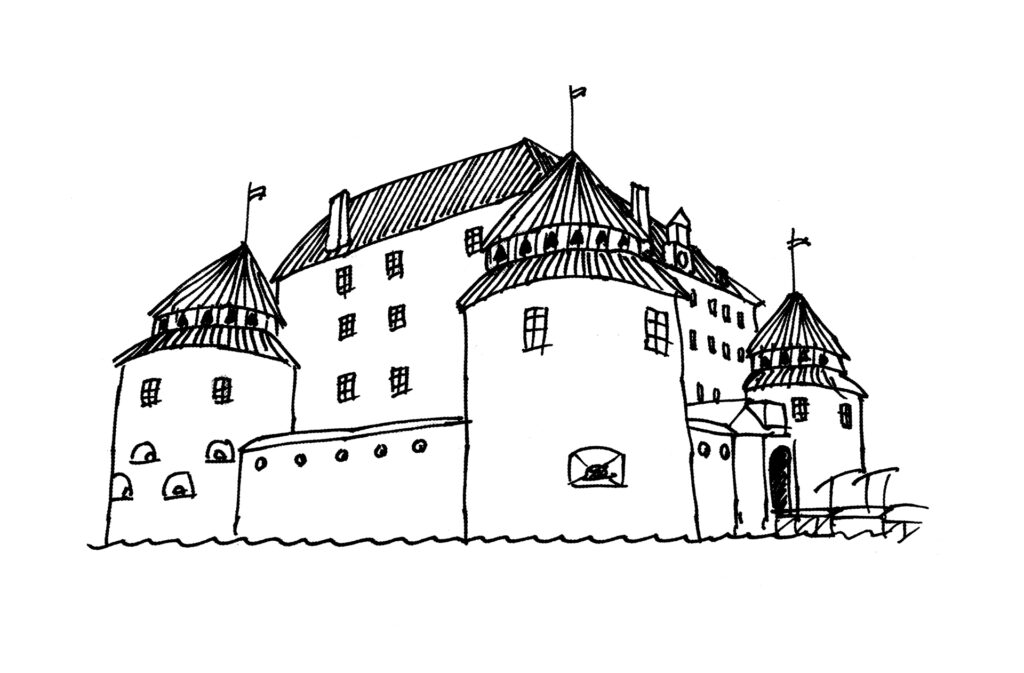
The defensive fortress had grown quite a bit, probably thanks to King Magnus Eriksson (who, by the way, was the grandson of the king known as Magnus Ladulås). The fortress was called Örebro House and consisted of three three-story residential wings built around the old tower. Facing south was a large hall with magnificent pointed arch windows – typical Gothic architecture and very medieval.
Even its size didn't protect the fortress from attacks. Every now and then, someone would attack Örebro House. Like in 1434, when Engelbrekt Engelbrektsson captured the fortress and moved in.
The 1500s
This wasn't a peaceful time for Örebro House. By the mid-1500s, the fortress had been attacked a whopping nine times. Besides Engelbrekt, Christian II, perhaps better known as Christian the Tyrant, was among those who attacked Örebro's pride. And a bit later, Gustav Vasa, on his march to the throne – and after a nine-month siege – took over the heavily battered fortress.
Gustav Vasa never rebuilt Örebro Castle, but both the city and the castle remained important during his reign. The 1529 Synod of Örebro was a milestone on the path toward a Protestant Sweden, and in early 1540, Gustav Vasa effectively established the hereditary monarchy during a ceremony at what was then known as the “ Rikssalen ” ( the castle).
When Gustav Vasa dies of cholera (1560)his youngest soninheritsÖrebroCastle.DukeKarl, who will eventually becomeKingKarl IX,is particularly fond ofthe French style “ castle ” and launches anextensiverenovation project.The castleis to become larger, more modern, and more beautiful.Hurray!
Things are going well for Örebro. Trade is booming, the city is growing and about 600 people call themselves Örebro residents. Now, the cityscape consists of Nikolaikyrkan, the fortress, and many low wooden houses that almost all are located along the main street.
The 1600s
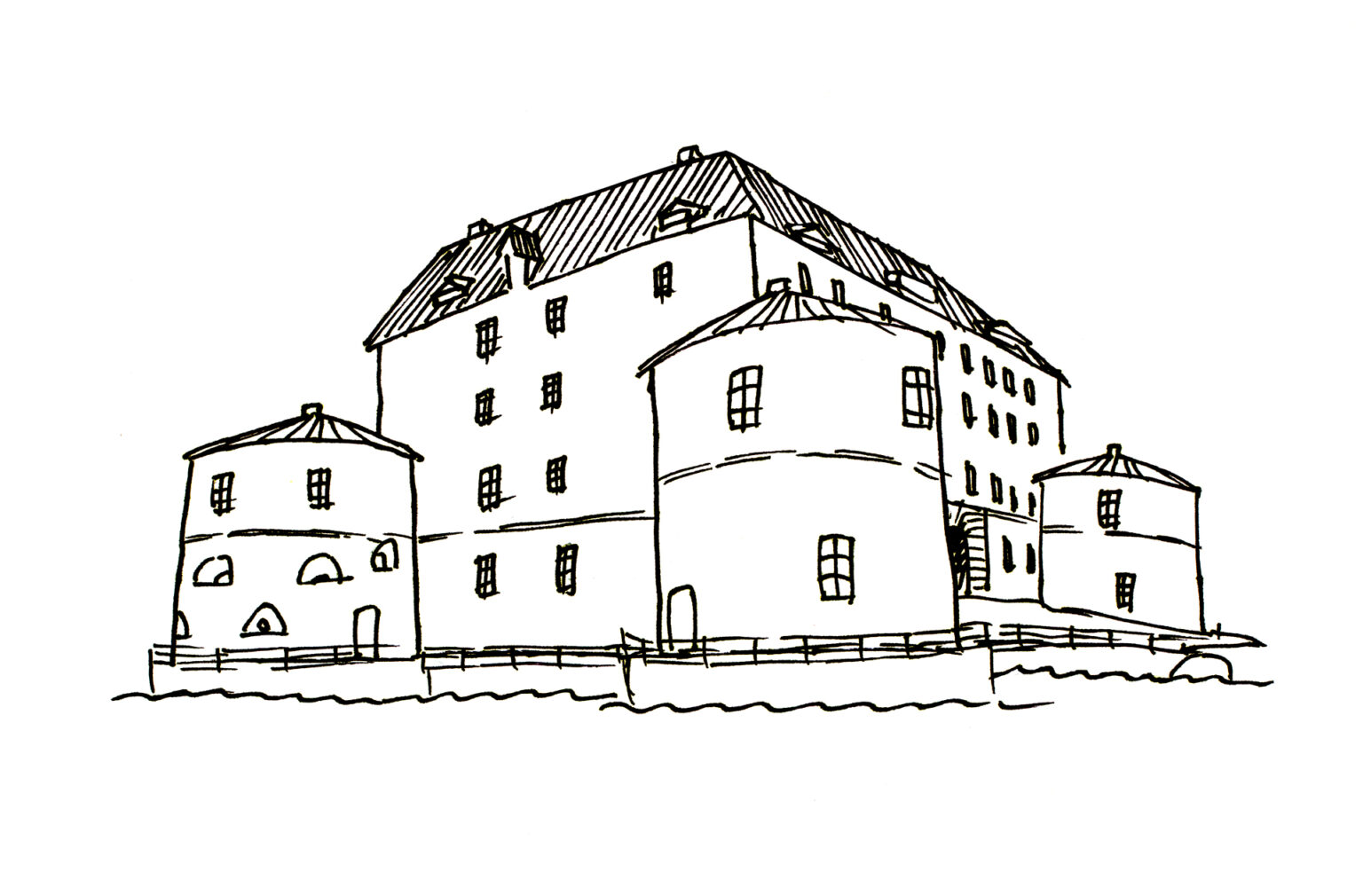
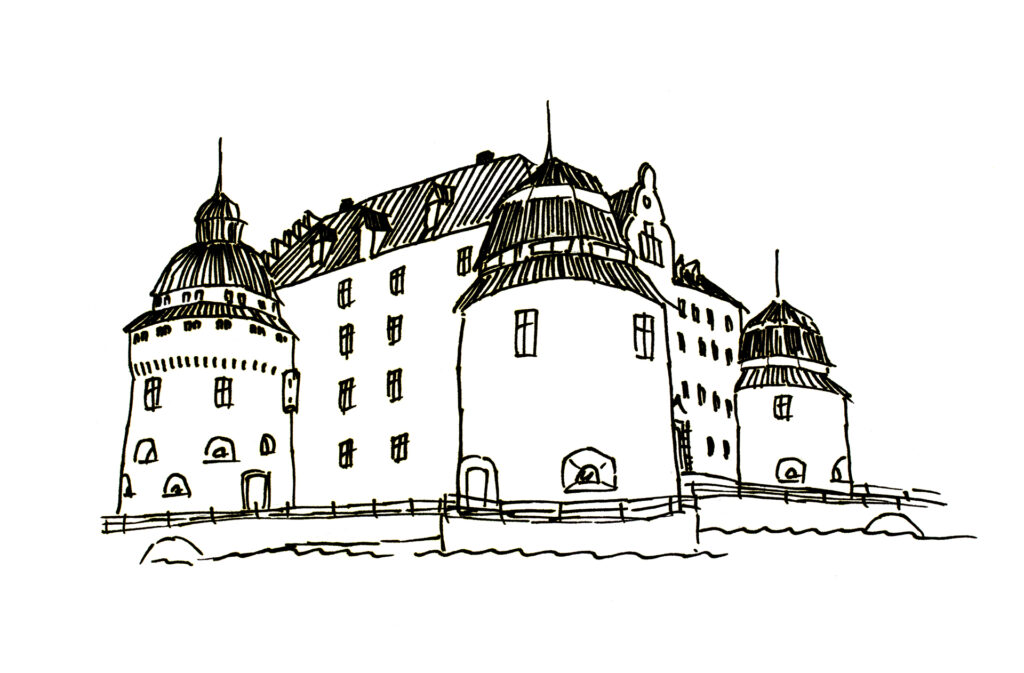
The fortress itself was heading for new grandeur, at least in terms of its appearance. Duke Karl was really pushing to transform the old medieval fortress into a magnificent Renaissance Castle. The main building became as tall as the old tower. There was a sturdy and richly decorated cannon tower at each corner. And the entrance got both a gate tower and a drawbridge.
Of course, there’s more going on at the castle than just construction. Between 1606 and 1617, no fewer than six Riksdags were held here. It was Charles IX (yep, Duke Charles had now become king) and his son Gustav II Adolf who presided over these sessions. The 1617 Riksdag was particularly significant, as it was then that the precursor to Sweden’s current parliamentary system was adopted. It was also the first time the new Rikssalen in Örebro castle was used.
In 1625, all the carpenters, masons, and painters packed up their tools. After more than 50 years of renovation, Örebro finally had its very own Renaissance Castle. But by then, Karl IX was already dead.
The 1700s
Örebro was still a small and pretty quiet town. Just over 2,000 people lived here, most in wooden houses, though a stone house would pop up now and then. Trade with Bergslagen and Stockholm continued, and shipping became increasingly important.
The castle It began to fall into disrepair as early as the second half of the 17th century, but there was no talk of renovation—not until the late 1750s. Until then, “ the castle ” was used for all sorts of purposes. Inside, there is everything from a detention cell and a prison to a rifle depot and a large grain storehouse.
castle in Örebro is now transitioning from the Renaissance to austere classicism. The city wall is being torn down, and in its place, the castle will feature stone bridges and terraces. It will also include an exclusive suite for the county governor. The first in a line of county governors to move in is Johan Abraham Hamilton. Since then, the county governor of Örebro County has always resided in the so-called “residence suite.”
The 1800s
The narrow ones streets of Örebro are lined with wooden houses. It's crowded and in places certainly quite muddy for the city’s residents, who number just over 4,000 by the middle of the century. Trade in iron and grain declines, while the number of artisans continues to grow. High above the houses rises the castle, newly renovated and transformed—from a fortress to an administrative building.
By the way, in the early 1800s, the notorious thief Lasse-Maja was really active. He tricked, stole, and plundered, but also ended up in one of the Castle's dark dungeons. From here, he managed to escape not just once, but twice!
Its central location in the country, far from the coast where the Russians might attack, makes Örebro a perfect place for the Riksdag in 1810. As just is not just any parliament. Here is where French military Jean Baptiste Bernadotte (formerly a marshal under Napoleon) is elected heir to the Swedish throne. And the royals who are there, they are hanging of course on the castle.
But in March 1854, the unthinkable happened. A fire broke out at a dye works by Svartån. Almost all of central Örebro burned down, and a third of the city's residents became homeless. Luckily, better times followed this disaster, largely thanks to the new industries emerging and the railway coming to the city.
The 1900s
The new industry, led by shoes and biscuits, made Örebro grow incredibly fast. By the beginning of the century, the number of Örebro residents was nearing 30,000 and new streets and neighborhoods were popping up in almost every direction.
It is also time to prepare the castle again. Partly because it’s necessary. Partly because it “should look older.” Various eras inspire and the castle gets a stairwell gable from the Middle Ages, spire caps à la 17th century and a Renaissance gable.Windows become arrow slits again and the white plaster is chipped away. “Historical romanticism” is the term.
The interior of the castle is also undergoing changes. In the 1920s, the County Administrative Board began using increasingly larger sections of the building as offices. At the end of that decade, the 17th-century “ Rikssalen ” was restored. At the same time, the Armory Hall received its impressive floor—featuring painted coats of arms from the noble families who had served as governors of the castle.
In the early 1990s, the County Administrative Board moved out of “ the castle.” It was time to renovate—and restore the building’s history. The small offices were transformed back into large halls, and the plastic paints were replaced with more authentic lime paints.
The 2000s
Örebro continues to grow. By 2025, over 160,000 residents will live in Örebro municipality. The once so important shoe industry is no longer here. Now, Örebro is a place with many different industries and sectors, a growing university, and tons of creativity.
And the castle stands where it always has. On its islet in the Svartån River, right in the heart of town. The big difference is that the castle’s halls and antechambers, terraces, and vaulted cellars are not just open to a select few.
There are still offices and private businesses in certain parts of the city, and of course the county governor still lives in the residence. But Örebro’ castle is also a well-known tourist destination, open year-round and filled with fun, exciting, and interesting experiences for visitors of all ages.
Welcome here too!